
Brand Identity
•
February 28, 2024
Whether you are building a business, personal brand or rebranding, the process can be daunting. Here we break down the 5 steps of brand building for small businesses.
Von Holland

Whether you are building a business, personal brand or rebranding, the process can be daunting. Here we break down the 5 steps of brand building for small businesses.
What is a Brand Build?
Your brand is more than just a logo – in fact, it’s the whole experience you create.
Every aspect of how people interact with your business, from the way it looks to how it sounds, shapes how they see you. For example, think about the taste of your product, how you greet customers, and how quickly you help them. All of these elements are pieces of your brand image.
A strong brand, like gold, is valuable!
When people think of what they need, your brand will be the first thing that comes to mind. Moreover, a strong brand is also friendly, fast, and honest, which makes people want to do business with you. Ultimately, building a great brand is an investment that pays off with a strong reputation, powerful marketing, and loyal customers.
Our 5 easy steps will show you how to develop your business in a smart way.

The 5 Steps of Brand Building
1. Knowing your ideal customer is key!
By figuring out who you’re selling to, you can set clear goals and build a loyal following. Here’s how:
- Who are you trying to reach? Think about things like age, location, and income. What are they interested in? What’s important to them?
- What problems do they have? Figure out what your ideal customer struggles with, what they want, and why they want it. Surveys and research can help you understand their needs better.
- How can you help? Once you know their problems, brainstorm ways your product or service can solve them, or even do a better job than what’s already out there.
Bonus tip: Create a “buyer persona” – a detailed profile of your ideal customer. This will help you imagine their life and understand how they make decisions.
2. Write Your Brands Mission Statement
Crafting a compelling brand identity requires defining several key elements:
- Personality and Voice: Who are you? Are you witty and playful, or sophisticated and authoritative? Your brand voice should resonate with your target audience and guide your communication style.
- Image and Style: What vibe do you want to convey? Professionalism, casual friendliness, or something in between? This translates to your visual identity, advertising aesthetic, and even writing style.
- Unique Strengths: What makes you stand out? Identifying your competitive advantage and highlighting it effectively will attract customers looking for your specific expertise.
- Market Position: Why should someone choose you? Clearly articulate your unique value proposition and what sets you apart from the competition.
By answering these questions, you gain clarity on your brand’s essence, allowing you to:
- Set focused goals: Your brand identity becomes the foundation for establishing clear, consistent business goals aligned with your mission.
- Make informed decisions: Every opportunity or idea can be evaluated through the lens of your brand identity, ensuring alignment with your core purpose.
- Build brand consistency: Maintaining a consistent brand image across all touchpoints fosters trust and reinforces your reputation as a reliable business.
3. Define Your Brand Position
Knowing your audience (Step 1) and defining your brand voice (Step 2) sets the foundation. Step 3 is about positioning: where your business sits relative to competitors, and what makes it the clear choice for the right customer.
For a small business, positioning doesn’t require being the cheapest or the biggest. It requires being the most relevant to a specific audience. A bookkeeping firm that positions as ‘the accountant who speaks plain English to first-generation business owners’ will outperform a generic ‘small business accounting’ message in every market.
To find your position, answer three questions: Who is your ideal client, specifically? What problem do you solve for them that alternatives don’t — or don’t solve as well? Why should they trust you over someone who offers something similar? The intersection of these three answers is your brand position.
4. Build Your Visual Identity
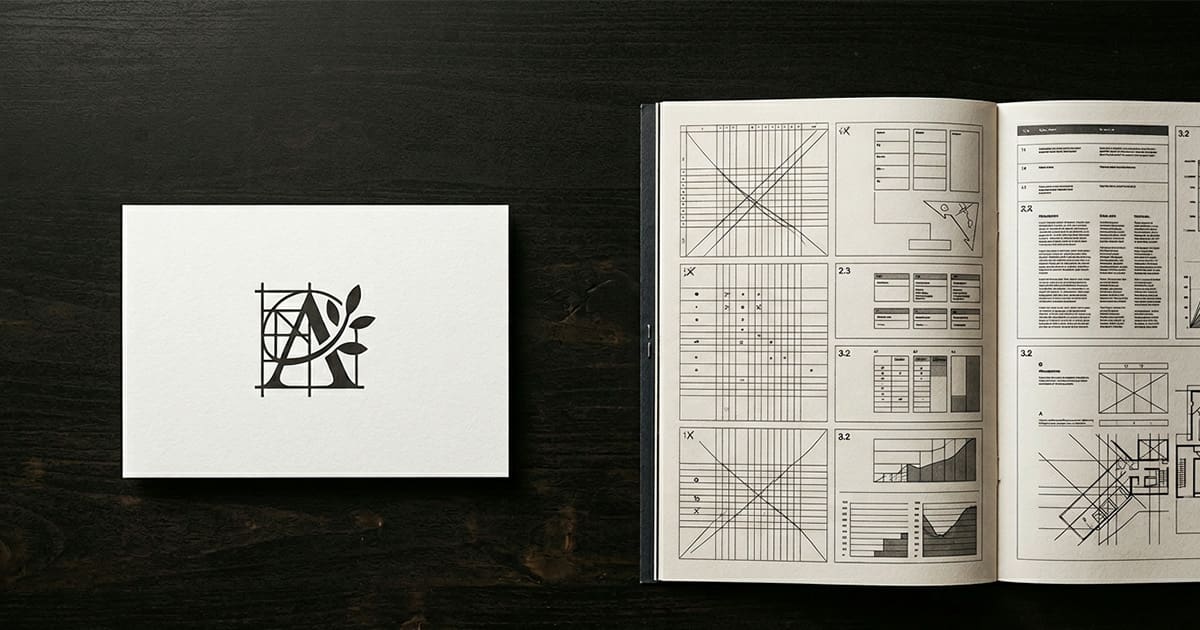
Your visual identity is the translation of everything in Steps 1–3 into a design system: a logo that reflects your brand personality, a color palette that communicates the right emotional signals for your audience, and typography that matches your tone of voice. These aren’t aesthetic choices — they’re strategic ones.
A small business visual identity system includes at minimum: a primary logo with secondary and submark variations, a color palette with exact specifications for web and print, and a typography system with clear rules for which fonts appear in which contexts. Together, these elements create a consistent visual impression across every touchpoint — website, social media, proposals, signage.
The most important outcome of this step isn’t the logo itself — it’s the brand guidelines document that explains how to use everything. Without guidelines, brand drift is inevitable. With them, every designer, developer, and marketing partner who ever works on your business is working from the same playbook.
5. Launch Consistently and Maintain
Building a brand is not a one-time project. It’s an ongoing practice of consistent application. Once your identity is established, the work becomes implementing it across every customer touchpoint — your website, your email signature, your social profiles, your invoices and proposals — and maintaining that consistency as your business evolves.
For small businesses, the most common failure point is inconsistency after launch: the new logo appears on the website but not on the truck wrap, the brand colors are used correctly in print but drift online, the voice is sharp in the guidelines but casual in the social posts. Consistency is what transforms a brand identity into actual brand equity.
Plan to revisit your brand foundation every 2–3 years. Not to replace it, but to ask: does this still represent who we are and who we serve? Has our audience evolved? Have our competitors moved? Brand maintenance is how a small business brand stays relevant without losing recognition.
Embrace the 5 steps of brand building, and watch your business thrive.
- Clarity is key: Defining your brand eliminates guesswork, saving you time and ensuring every decision aligns with your goals.
- Strength through consistency: A well-defined brand building projects builds confidence and leaves a lasting impression on your customers.
How long does it take to build a brand for a small business?
A complete brand build — from strategy through visual identity and guidelines — typically takes 4–8 weeks with a professional agency, depending on scope and how quickly the client can review and respond to work. A brand strategy-only engagement is shorter, typically 2–3 weeks. The most common cause of extended timelines is slow feedback from the client, not slow execution from the agency. Clear feedback and prompt decision-making consistently produces the best brand work on the fastest timeline.
Can I build a brand myself, or do I need an agency?
A business owner can develop the strategic foundation of their brand — audience definition, positioning, mission and values — through structured reflection and research. The challenge comes with design execution and objective distance. Most business owners are too close to their own business to evaluate their brand the way a potential customer does. And professional logo and identity design requires visual expertise that most non-designers don’t have. The most common outcome of fully DIY branding: the business pays twice — once for the initial DIY version and again when it needs to be rebuilt professionally.
What’s the most important step in brand building?
Step 1 — defining your ideal customer and understanding their specific problem — is the foundation everything else rests on. A logo designed without a clear audience in mind is guessing. A mission statement written without understanding what the ideal customer needs to believe is generic. Positioning developed without competitive research is arbitrary. The businesses that skip Step 1 to get to the visible deliverables faster consistently produce brands that look fine but don’t differentiate. Audience clarity is where brand building starts and where most of its value comes from.
How much does brand building cost for a small business?
A foundational brand build for a small business — covering strategy, logo system, color palette, typography, and brand guidelines — typically ranges from $3,000 to $8,000 with a professional agency. Logo-only design runs $500–$2,500. A full brand identity system plus website design starts around $10,000. The right investment depends on how competitive your market is, how much of your new business comes through channels where brand perception matters, and how long you plan to operate under this identity.
What’s the difference between brand building and brand strategy?
Brand strategy is the thinking phase of brand building: defining your audience, positioning, mission, voice, and what makes your business distinct. Brand building encompasses strategy plus execution — including visual identity design, brand guidelines, and the ongoing practice of applying the brand consistently. Strategy without execution remains theoretical. Execution without strategy produces visuals that look professional but don’t represent a differentiated business. The brands that compound in value over time are the ones where both phases are done well.
Schedule a free Brand Connect Call to discuss your brand-building goals.
Need a hand? Our team specializes in crafting powerful brands. Contact us today to discuss how we can help your business flourish.

- READY TO ACT ON THIS
Your Brand Should Be Working While You're Not.
If this article resonated, the next step is a free 30-minute conversation. No pitch, no pressure — just clarity about where your brand stands and what's worth fixing first.
Book a Free Discovery Call