
SEO & Growth
•
March 16, 2026
Most of the GEO content out there is written for enterprise marketing teams with dedicated SEO staff and five-figure monthly retainers. This isn’t that. This is a practical playbook written
Joe Abellard

Most of the GEO content out there is written for enterprise marketing teams with dedicated SEO staff and five-figure monthly retainers. This isn’t that.
This is a practical playbook written for small business owners who are doing this themselves — or who want to hand it to someone on their team and say “start here.”
Seven steps. Prioritized by impact. Written without jargon.
Let’s go.
Before You Start: Set Your Baseline
Before you optimize anything, you need to know where you currently stand. Spend 15 minutes doing this:
Open ChatGPT and Perplexity. Search for the questions your best customers would ask when looking for a business like yours. Write down who appears, how they’re described, and whether you’re mentioned at all.
This is your GEO baseline. Everything you do in the following steps is working toward changing those results. You’ll run this same test again in 60 days and measure the difference.
| “You can’t improve what you can’t see. The baseline test takes 15 minutes. Most business owners who do it for the first time are surprised by how clearly the gaps show up.” |
Step 1: Write Your Entity Statement
An entity statement is a single paragraph that tells AI engines — and human readers — exactly who you are. It needs to be specific enough that an AI system reading only that paragraph could accurately describe your business in a generated answer.
It belongs at the top of your About page, and ideally on your homepage as well.
Here’s what it needs to include:
- Your business name
- Your primary service (be specific — not “marketing solutions” but “brand strategy and logo design”)
- Your customer type (small businesses, restaurants, healthcare practices — be specific)
- Your location (city + state, and whether you work remotely/nationally)
- A credibility signal (years in business, number of clients served, industry specialization)
Example: “Consort Creative is a branding and web design agency in St. Louis, Missouri, specializing in brand strategy, logo design, and website design for small and mid-sized businesses. Founded in 2009, we’ve worked with clients across 18 industries in 12 states, delivering agency-level brand work at small-business-appropriate scale.”
That one paragraph is more valuable for GEO than three pages of general brand copy. Write yours. Put it at the top of your About page. Make it the first paragraph an AI system will read when it evaluates whether to cite you.
Step 2: Fix Your Service Page Copy
Your service pages are probably written to persuade. GEO also needs them to inform — specifically, to answer the questions AI engines get asked about businesses like yours.
For each service page, make sure you’ve answered:
- What is this service, in plain language?
- Who is it for? (your specific customer type)
- What does it include? (specific deliverables, not vague descriptions)
- What does it cost, or what range should customers expect?
- How long does it take?
- What makes your version of this service different?
You don’t need a separate page for every possible question. But each service page should be specific enough that an AI engine reading it could accurately answer “what does [business name] offer for [service type]?” without ambiguity.
Deliverables lists are particularly valuable for GEO. When you spell out exactly what a client receives — “three logo concepts, SVG and PNG files, a brand guidelines PDF, and a 30-day revision window” — AI engines have extractable, specific, citable facts. “We design logos that capture your brand’s essence” gives them nothing to work with.
Step 3: Add FAQ Sections to Your Service Pages
FAQ sections are one of the highest-leverage GEO improvements you can make, and most small business websites don’t have them.
AI engines are fundamentally question-answering machines. When your content is formatted as clear questions and clear answers, you’re speaking the language AI systems are built to process and cite. A FAQ section on your website isn’t just good UX — it’s a direct invitation for AI engines to pull from your content.
For each service page, write 5–8 questions that your ideal customers actually ask. Not softball questions you can answer with a marketing pitch — real questions: “How much does a brand identity package cost?”, “How long does it take to build a website for a small business?”, “Do I need brand strategy before I get a logo?”, “Will I own the files when the project is done?”
Answer each question directly. One to three paragraphs. No hedging. No upselling inside the answer. Just the honest answer your best customers would appreciate.
Then, if you’re on WordPress, add FAQPage schema to those sections through your SEO plugin. This makes the question-answer pairs machine-readable, giving AI engines even cleaner access to the content.
| ✅ DO THISThe questions you get asked most in discovery calls are your best FAQ content. Start there. Write them down after your next three client conversations and you’ll have your FAQ outline. |
Step 4: Install Schema Markup
Schema markup is structured data that tells AI engines and Google exactly what your content represents. Without it, AI systems infer your business type from unstructured text. With it, they have a precise, machine-readable description to work from.
The four schema types that matter most for small businesses:
Organization + LocalBusiness schema
Describes your business entity: name, URL, logo, phone, email, address, service area, hours, price range. This is the single most important schema for AI citation. It’s the foundation everything else builds on.
FAQPage schema
Marks up your FAQ sections so AI engines can directly extract question-answer pairs. If you completed Step 3, adding FAQPage schema to those sections is the next logical step.
Service schema
Describes each service you offer — name, description, provider, area served. Particularly valuable for local service businesses where AI engines are answering “who offers [service] in [location]” queries.
Article / BlogPosting schema
Marks up your blog posts with author, date published, headline, and description. Signals to AI engines that your content is published by a real, identifiable expert — not anonymous filler.
If your site is on WordPress, SmartCrawl (our plugin of choice) has a Schema Wizard that walks you through setting up all four in a single session. It takes 2–3 hours and runs automatically forever after.
Step 5: Build Your External Presence
Your website is the foundation. But AI engines don’t just read your website — they read everything they can find about you. The more consistently your business appears across the web, described in the same way, the more confident AI systems are in citing you.
Priority actions:
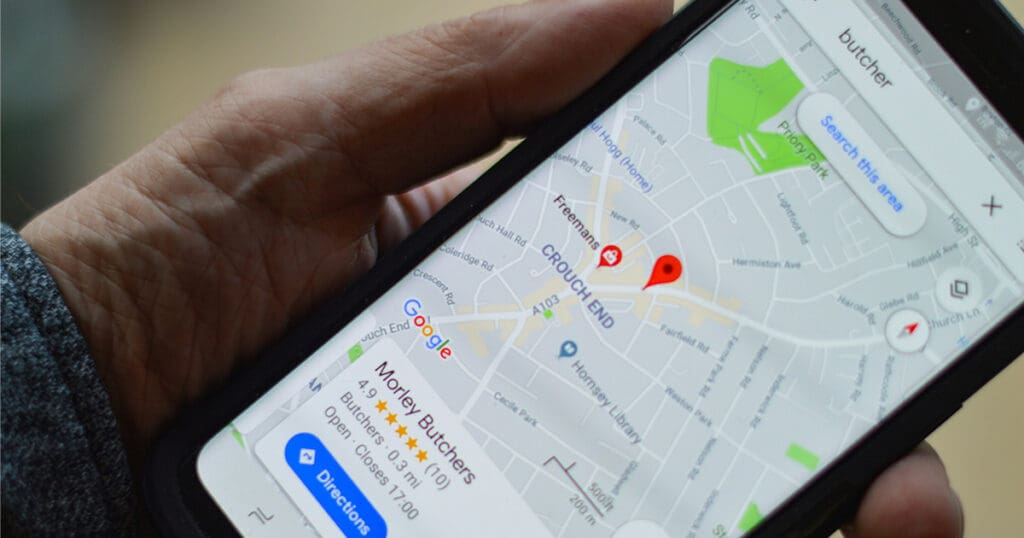
- Google Business Profile — claim it, fill in every field, add photos, enable messaging. This is the single highest-impact external profile for local businesses, especially for Google AI Overviews.
- Consistent NAP — make sure your Name, Address, and Phone number are identical across your website, Google Business Profile, Yelp, Facebook, and any industry directories. Inconsistencies weaken your entity signals.
- Reviews — actively ask your best clients for Google reviews. Not by mass email — by personal ask, after a project goes well. Ten genuine reviews describing specific work you did are worth more for GEO than a hundred generic star ratings.
- Industry directories — claim your profile on any directory relevant to your industry. Filled-out profiles on legitimate directories give AI engines additional consistent references to your business entity.
You don’t need to be everywhere. You need to be consistent and complete in the places that matter. For most small businesses, that’s Google, Yelp, Facebook, and one or two industry-specific directories.
Step 6: Publish Answer-First Content
This is the long-game step — and the one that compounds most powerfully over time.
The businesses that dominate AI search in their categories are the ones that have published a body of expert, specific, answer-oriented content on the topics their customers care about. AI engines develop what researchers call “topic authority” for sources that consistently publish credible content in a particular domain. Once you’ve established that authority, each new piece you publish gets cited more readily than your first.
The format that works best for GEO content:
- Answer-first structure — state the key point in the first sentence or two, then expand
- Clear H2 and H3 headings that could stand alone as questions or answers
- Specific, concrete examples rather than general principles
- Real numbers, timelines, and deliverables rather than vague descriptions
- A FAQ section at the end of every post
Topic ideas to start with:
- “How much does [your service] cost for a small business?”
- “How long does [your process] take?”
- “What’s the difference between [option A] and [option B]?” (a question your clients regularly ask)
- “When does a small business need [your service]?”
- “What should I look for when hiring a [your service type]?”
Two well-written posts a month, answering specific questions your clients actually ask, will build more GEO authority over 12 months than 20 generic posts ever could.
Step 7: Measure and Iterate
GEO doesn’t have a standard dashboard yet. But that doesn’t mean you can’t measure it.
Manual AI citation testing — the same process you used to set your baseline — is your primary measurement tool. Run it monthly. Check the same 5–10 queries in ChatGPT and Perplexity. Track which queries now mention your business, how you’re described, and which queries still have gaps.
Secondary signals to track:
- Direct traffic and referral traffic in Google Analytics — AI engines don’t always send click-through traffic, but they do generate branded search activity (people who heard about you through AI and then Google you directly)
- Google Search Console impressions for branded queries — a rising baseline here often correlates with improved AI visibility
- Monthly Google review count and rating — a signal that clients are engaging with your GBP, which feeds AI systems
- SmartCrawl SEO Health score — not a GEO metric directly, but a proxy for the technical health that supports GEO performance
Revisit your playbook quarterly. The GEO landscape is evolving faster than traditional SEO did in its early years. What earns citations today will be refined by mid-2026. Businesses that measure consistently and adjust early will compound their advantages.
| “The GEO window is still open for small businesses. The businesses that build this foundation now — entity clarity, schema, answer-oriented content, external presence — will earn citation advantages that compound for years.” |
The Compounding Effect
Here’s what makes GEO different from a lot of marketing tactics: the work compounds.
When you install schema markup, it runs forever. When you publish a well-structured FAQ post, it continues feeding AI engines months and years after you wrote it. When you accumulate 25 genuine Google reviews over two years, that social proof becomes a permanent trust signal that AI systems keep referencing.
Compare that to paid advertising, where the day you stop paying, you stop appearing. GEO is structural. It builds authority that belongs to your business and doesn’t expire.
That’s the case for starting now, even if you start small. One entity statement, one FAQ section, one schema setup, one GBP review request this week. You’ll be twelve months ahead of the business owner who’s still “waiting to see how this AI search thing plays out.”
— Consort Creative provides AI SEO and GEO services built specifically for small businesses. We can handle your entire GEO foundation — entity copy, schema, FAQ structure, content strategy — or audit what you have and tell you exactly where to focus. Start with a free audit at consortcreative.com/audit


- READY TO ACT ON THIS
Your Brand Should Be Working While You're Not.
If this article resonated, the next step is a free 30-minute conversation. No pitch, no pressure — just clarity about where your brand stands and what's worth fixing first.
Book a Free Discovery Call