
Strategy
•
April 20, 2026
You’re About to Spend $15,000 on the Wrong Thing You’ve decided it’s time. The current website is embarrassing — maybe it was built in 2019, maybe a nephew built it
Consort Creative

You’re About to Spend $15,000 on the Wrong Thing
You’ve decided it’s time. The current website is embarrassing — maybe it was built in 2019, maybe a nephew built it for free, maybe it just never quite looked like the business you’ve become. So you start Googling web designers in St. Louis, collecting proposals, comparing packages.
Every proposal looks reasonable. Some even look exciting. And somewhere between $8,000 and $25,000, you’re going to pick one and say yes.
Here’s the problem: you’re solving the wrong problem first.
A website is not your brand. A website is where your brand lives. And if you haven’t figured out what your brand actually is before a single page gets designed, you’re about to spend a significant amount of money building a beautiful house with no foundation — and you’ll probably tear it down and rebuild it within three years.
This is the conversation we have constantly at Consort Creative , and it’s the one most web designers in St. Louis aren’t having with you.
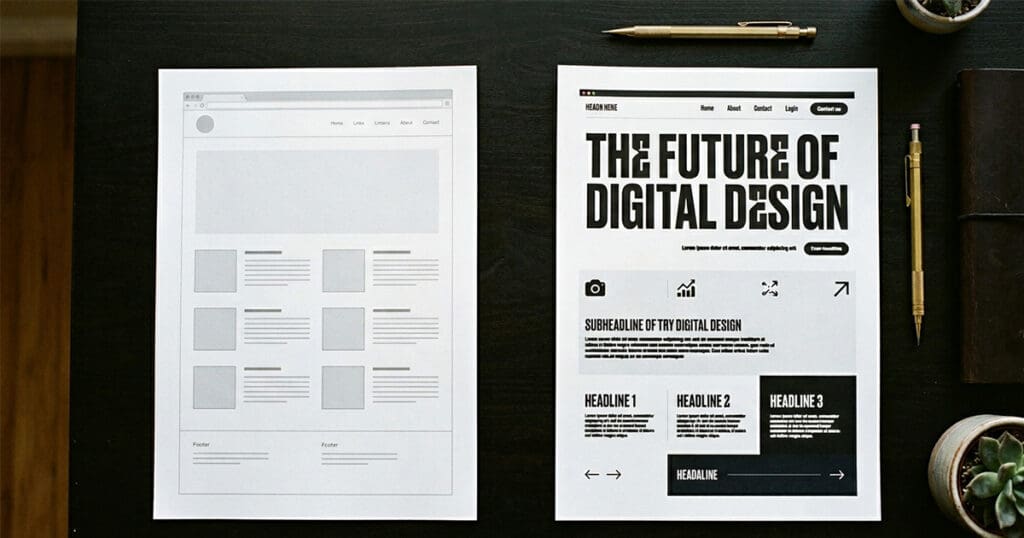
The Expensive Mistake Hiding in Plain Sight
Picture two St. Louis businesses. Both are professional service firms. Both just launched brand-new websites. Both spent real money — one spent $9,000, the other spent $12,000.
The first site is clean, modern, and completely forgettable. The homepage says “Trusted. Experienced. Results-Driven.” The about page talks about the team’s “passion for excellence.” The services page lists what they do but never explains why a client should care. It looks professional the way a stock photo looks professional — technically fine, emotionally empty.
The second site opens with a headline that speaks directly to the exact frustration their ideal client is experiencing. The copy sounds like a real person wrote it for a real person. Every page builds on a clear, consistent argument for why this firm is the right choice. You understand within ten seconds who they serve, what they believe, and what makes them different.
The first business is getting traffic and watching it leave. The second is converting.
The difference isn’t the design budget. It isn’t the developer. It isn’t even the photography. The difference is that the second business did the strategic work before the design work. They had a brand strategy in place before a single pixel was touched.
This is the costly mistake that plays out every day for small and mid-sized businesses nationwide — and it’s especially painful in a competitive local market like St. Louis, where restaurants, law firms, contractors, consultants, and retail shops are all fighting for the same attention.
Why “We Need a Website” Is the Wrong Starting Point
When a business owner says “we need a new website,” what they usually mean is one of a few things: our current site looks outdated, we’re not getting leads, or we’re embarrassed to hand out our URL.
Those are real problems. But a new website doesn’t automatically fix any of them.
A website is a delivery mechanism. Brand strategy is the message it delivers. Without the message, you’ve just got a faster truck carrying nothing.
The right starting question isn’t “what should our website look like?” It’s “who are we, who do we serve, and why does it matter to them?”
That sounds philosophical, but it has deeply practical consequences. When you can answer those questions with precision — not with vague aspirations but with specific, researched, defensible answers — everything downstream gets easier and more effective. The website copy writes itself. The visual direction becomes obvious. The SEO strategy has actual substance to work with. The ads have something real to say.
When you can’t answer those questions, you end up with a homepage that says “trusted, experienced, results-driven” — because those words fill space without saying anything.

What Brand Strategy Actually Includes (And Why Your Website Needs It)
Brand strategy is one of those terms that gets used loosely, so let’s be specific about what it means in the context of building a website that actually works.
Before a single design decision gets made, a real brand strategy process covers your target audience in depth — not just demographics but psychographics, motivations, fears, and the specific language they use when they’re looking for what you offer. It covers competitive positioning, meaning an honest look at what other businesses in your category are saying and where the genuine gaps are. It defines your value proposition — the specific, credible reason a customer should choose you over everyone else.
It also establishes your brand messaging framework: the core narrative, the supporting proof points, the tone of voice. How formal or conversational should the copy be? What words should never appear on your site? What’s the one thing you want someone to remember after reading your homepage?
And finally, it sets visual direction — not the logo itself, but the strategic brief that tells a designer what the brand should feel like and why. Color psychology, typography personality, imagery style — all grounded in what will actually resonate with the audience you’ve defined.
This is what our Brand Discovery process produces. It’s not a mood board. It’s not a brainstorm. It’s a strategic document that becomes the foundation for every design and content decision that follows.
How Brand Strategy Directly Improves Website Performance
This is where the argument stops being philosophical and starts being measurable.
When your brand messaging is clear and specific, bounce rates drop. Visitors who land on your site understand immediately whether they’re in the right place. When the answer is yes, they stay. When your positioning is differentiated — when you’re not saying the same things as every competitor — search engines have something meaningful to index, and the visitors who find you are more likely to convert because they’re finding you for the right reasons.
Consistent visual identity builds trust faster than any single design element can. Research from the Nielsen Norman Group consistently shows that users form first impressions of a website in roughly 50 milliseconds — and those impressions are heavily influenced by visual coherence. A brand that looks consistent across every touchpoint signals stability and professionalism in ways that a visitor can’t always articulate but absolutely feels.
A defined audience doesn’t just improve your marketing — it improves your product. When you know exactly who you’re serving, every decision on the site, from the navigation to the call-to-action, gets sharper.
And perhaps most practically: when you’ve done the brand strategy work first, the website project itself gets faster and cheaper. Designers aren’t guessing at direction. Copywriters aren’t starting from scratch. Revisions drop because everyone is working from the same strategic brief. The project has a north star.
The St. Louis Market Doesn’t Reward Generic
St. Louis is a city with genuine local pride and a tight-knit business community. But that also means the competition for attention — especially in service industries — is real and constant.
A restaurant in the Grove isn’t just competing with the place next door. It’s competing for the same Friday-night decision against dozens of options, and the business that’s clearest about who it is and who it’s for wins that decision more often. A law firm in Clayton isn’t just competing on credentials; every firm on that street has credentials. The one with a clear, human, specific brand story is the one that gets the call.
The same is true for contractors, consultants, healthcare practices, financial advisors, and every other category where St. Louis small businesses are trying to grow. Generic websites get lost. Specific, strategic brands get remembered.
This is why working with a St. Louis branding agency that understands the local market context matters. The competitive dynamics here are specific. The audience expectations are specific. A brand strategy built with that context in mind is going to produce a website that performs better than one built from a national template with your logo dropped in.
What the Consort Creative Process Actually Looks Like
At Consort Creative, we built our entire methodology around a simple conviction: strategy before design, always.
Our process moves through three phases — Discover, Design, and Grow — and the sequence is non-negotiable for a reason.
Discover is where everything starts. This phase involves real market research, audience analysis, competitive positioning, and brand strategy development. We’re asking hard questions and finding honest answers: What does your audience actually care about? What are your competitors getting wrong that you could get right? What’s the one thing your brand needs to own in the mind of your ideal customer? The output is a brand strategy document that becomes the foundation for everything else.
Design is where the strategy becomes visual and verbal. The logo, visual identity system, and website are all built from the strategic foundation we’ve established. This means design decisions aren’t aesthetic preferences — they’re strategic choices with clear rationale. The website copy isn’t written to fill space; it’s written to move a specific person through a specific decision.
Grow is where the investment starts compounding. SEO, content strategy, and advertising all work dramatically better when the brand is clear. You’re not trying to get traffic to a generic site and hope something sticks — you’re driving the right people to a site that’s built to convert them.
The reason this sequence works is simple: each phase builds on the one before it. Discover informs Design. Design enables Grow. Skip Discover, and the whole structure is unstable.
The Real Cost of Doing It Backwards
Here’s a pattern we see regularly, and it’s genuinely painful every time.
A business owner spends $10,000-$20,000 on a website. Eighteen months later, they’re frustrated. The site isn’t converting. The brand doesn’t feel right. The messaging doesn’t match where the business has evolved. They’ve changed their positioning, or they’ve gotten clearer on their audience, or they’ve realized the visual identity never really fit.
So they start over. Another $10,000-$20,000. Another six months of project time. And this time, hopefully, they get it right.
The businesses that skip brand strategy don’t save money. They spend more, just on a longer timeline and with a lot more frustration in between.
The smarter investment is front-loading the strategic work. A Brand Discovery engagement isn’t an add-on cost — it’s the cost of not having to redo everything in two years. It’s the difference between building once and building twice.
The Picture of What’s Possible
Imagine launching a website where the headline on your homepage stops your ideal customer mid-scroll because it describes their exact situation. Where the copy sounds like it was written by someone who genuinely understands their problem. Where the visual identity feels so consistent and considered that trust forms before they’ve read a single word.
Imagine your sales team sending that URL to prospects and hearing back “your website is exactly what I was looking for.” Imagine your Google Analytics showing visitors who stay, read, and convert — not visitors who bounce in eight seconds because nothing on the page spoke to them.
That’s not a fantasy. That’s what happens when brand strategy comes before web design. That’s what the Design phase produces when it’s built on a real strategic foundation.
And that’s the kind of website that keeps working for you — through the Grow phase and beyond — because it’s built on something true and specific, not something generic and forgettable.
Start With Strategy. Everything Else Follows.
If you’re a St. Louis business owner — or a small business owner anywhere — who’s been thinking about a new website, the most valuable thing you can do right now is pause before you send that first proposal request.
Not because you don’t need a website. You probably do. But because the website you need is one built on a clear brand strategy, and that strategy has to come first.
The businesses that invest in brand strategy before web design build once. The ones that skip it build twice.
If you’re ready to do this right, book a free 30-minute Brand Discovery consultation with our team. We’ll talk through where your brand stands today, where you want to go, and what the path looks like. No pitch, no pressure — just a real conversation about strategy.
Frequently Asked Questions
Do I really need brand strategy if I’m a small business, not a big corporation?
Brand strategy is arguably more important for small businesses than for large ones. Big companies have marketing budgets that can overcome unclear positioning through sheer volume. Small businesses don’t have that cushion — every dollar spent on a website, an ad, or a piece of content needs to work hard. A clear brand strategy is what makes that possible. It’s not a luxury for large companies; it’s a survival tool for small ones.
How long does a brand strategy process take before we can start on the website?
At Consort Creative, our Brand Discovery process typically runs two to four weeks, depending on the scope and complexity of the business. That timeline includes audience research, competitive analysis, positioning development, and the brand messaging framework. It’s not a lengthy detour — it’s a focused sprint that makes the entire website project faster and more effective on the other side.
What if I already have a logo and some brand elements — do I still need brand strategy?
Having a logo is not the same as having a brand strategy. A logo is a visual asset. Brand strategy is the thinking that determines whether that logo — and everything built around it — is actually connecting with the right audience in the right way. Many businesses come to us with existing visual elements that are perfectly usable once we’ve built the strategic foundation underneath them. The discovery work tells us what to keep, what to refine, and what’s missing.
How does brand strategy affect SEO specifically?
Search engine optimization works best when there’s a clear, specific brand story to optimize around. Keyword strategy, content topics, and on-page messaging all become more focused and more effective when you’ve defined your audience and positioning first. Generic websites with generic messaging produce generic SEO results. A brand strategy gives your SEO work something real to amplify — a specific point of view, a defined audience, and language that matches how real people search.
We’ve already built a website without brand strategy. Is it too late?
It’s never too late, but the sooner you address it, the less money you leave on the table. Many businesses come to us after launching a site that isn’t performing the way they hoped. We can do the brand strategy work now and use it to guide a website refresh or full redesign. The cost of doing it right now is almost always less than the ongoing cost of a site that isn’t converting.
What makes Consort Creative different from other web design agencies in St. Louis?
Most web design agencies start with design. We start with strategy. Our Discover → Design → Grow methodology means that every website we build is grounded in real audience research, competitive positioning, and a clear brand story. We’re a St. Louis branding agency that happens to build excellent websites — not a web design shop that offers branding as an afterthought. That distinction matters enormously for the results our clients see.

- READY TO ACT ON THIS
Your Brand Should Be Working While You're Not.
If this article resonated, the next step is a free 30-minute conversation. No pitch, no pressure — just clarity about where your brand stands and what's worth fixing first.
Book a Free Discovery Call