
Brand Identity
•
December 18, 2025
Your logo might look great. Your color palette might work well on Instagram. But if your brand elements don’t form a cohesive system — one with clear rules and consistent
Consort Creative
Your logo might look great. Your color palette might work well on Instagram. But if your brand elements don’t form a cohesive system — one with clear rules and consistent logic — your marketing will always look like it was assembled from different sources. For small businesses, a brand identity system is what separates looking professional from being professionally branded.
At Consort Creative, we call this the Technical Blueprint of a Modern Brand Identity — a framework that brings your visual elements, messaging, and digital touch points together so your business speaks with one consistent voice everywhere.
Brand Grids & Guidelines – The Hidden Engineering of Design

Every strong identity begins with structure.
Behind the clean visuals you see on the surface, there’s an underlying grid that governs spacing, proportion, and layout across every brand element. These guidelines create internal logic — so your marketing designer, website developer, and social media manager are all building within the same framework.
In technical terms:
- Grid systems ensure scalable design alignment across devices.
- Spacing and margin rules define precision that keeps visuals consistent.
- Layout ratios and typographic hierarchies replicate proportion the way responsive code does for a website.
A clear Brand Blueprint transforms aesthetic decisions into repeatable formulas — a vital asset for small businesses looking to grow without losing consistency.
For small businesses: this means your designer delivers not just a logo file, but a document that explains exactly how that logo should be used — minimum sizes, spacing rules, what backgrounds it works on, and what it should never be placed against.
Color, Typography & Tokenization – Creating Digital Consistency
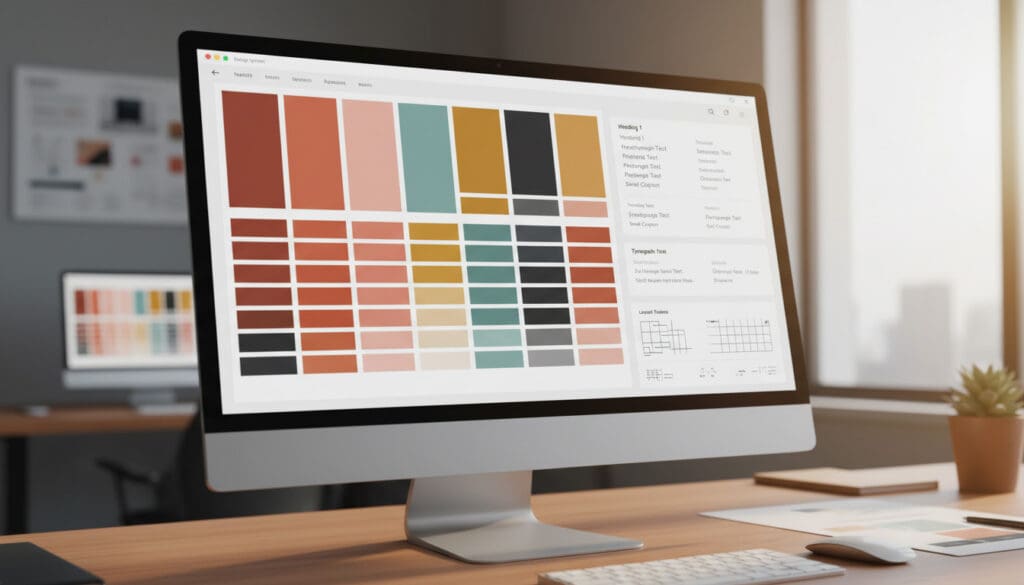
In the digital ecosystem, colors and fonts are data.
Instead of arbitrary hex codes or random typeface pairings, we define design tokens — variables that can be applied across your entire digital platform. Think of them as the reusable building blocks of your brand identity.
In practical terms, this means your brand guidelines specify exact color codes for every platform — HEX for your website, RGB for digital design tools, CMYK for printed materials. Your web developer and your print shop are working from the same numbers. Nothing drifts.
This means developers and designers speak the same visual language — and updates happen in one place. A change to your color token automatically cascades through your entire digital presence.
Pro Tip: Treat your visual identity like a responsive codebase — modular, consistent, and version‑controlled.
Scalable Identity Systems for Small Business

Scalability is what separates true brand systems from static style guides.
For small to mid‑sized companies, growth often requires new digital experiences (e‑commerce, landing pages, product packaging). A scalable identity ensures all marketing materials maintain visual integrity no matter how many outputs you add.
Technically, this involves:
- Vector‑based asset libraries (SVG / EPS) — for resolution‑independent scaling.
- Grid‑based layout templates that adapt from print to web.
- Multichannel design frameworks connecting content management tools (WordPress, WooCommerce, Canva Brand Hubs).
By prioritizing scalability early, your brand avoids the “Frankenstein effect” — that inconsistent patchwork of visuals that happens when each department designs in isolation.
What This Looks Like for a Small Business
A small business brand identity system from Consort Creative typically includes five components that work together: a logo system (primary, secondary, and submark variations), a color palette with exact specifications for web and print, a typography system (display font + body font + usage rules), a graphic elements library (icons, textures, or supporting visuals), and a brand guidelines document that explains how all of it works.
The system is designed to answer the question a designer or developer will ask when they need to create something new for your business: what does this need to look like? With a complete brand identity system, that question has a documented answer — one that keeps every touchpoint looking like it came from the same company.
Mapping the Brand Lifecycle – Data‑Driven Refinement

A modern brand identity isn’t a static deliverable; it’s iterative software.
Analytics tools help measure performance in real time — tracking how users interact with visuals and messaging across platforms. Heatmaps, scroll data, and color‑contrast tests reveal what drives engagement and where you’re losing attention.
Key metrics to track:
- Recognition Consistency: Do users associate specific hues or shapes with your brand within seconds?
- Conversion Impact: Which design elements (CTA color / button placement) improve click‑through?
- Retention Rate: Do cohesive visuals improve user return rates?
Treat this feedback loop like a developer treats a code repository: every update pushes visual performance forward.
From Blueprint to Brand Leadership
For small and mid‑size businesses, getting brand identity right is about more than design — it’s about building a reliable, scalable, measurable system.
A technical blueprint ensures every marketing move fits within an intentional structure, making your brand faster to deploy, easier to scale, and more recognizable across every platform it touches.
FAQ: Brand Identity Systems for Small Businesses
What is a brand identity system?
A brand identity system is the complete set of visual and verbal elements that defines how your business looks and communicates — and the rules for using them consistently. It includes your logo system (primary, secondary, and submark variations), color palette with exact specifications, typography (fonts and how they’re used), graphic elements, and brand guidelines that document everything. Without a system, individual brand elements look different across different applications. With one, every touchpoint — from your website to a business card to a social post — looks like it came from the same intentional source.
Do small businesses need brand guidelines?
Yes — arguably more than large businesses. Large companies have in-house creative teams who learn the brand by osmosis. Small businesses frequently work with different designers, developers, and marketing freelancers across their lifespan. Without brand guidelines, each new person makes their own visual decisions. The result is gradual brand drift: slightly different shades of your brand color on different platforms, inconsistent logo sizes, different typography in different contexts. Guidelines cost a fraction of what it takes to fix accumulated inconsistency.
What’s included in a brand guidelines document?
A professional brand guidelines document for a small business typically covers: logo usage (primary, secondary, and submark versions with minimum sizes and clear space requirements), color specifications (HEX, RGB, CMYK, and Pantone values for each brand color), typography hierarchy (which fonts to use for headlines, body copy, and supporting text, and at what sizes), photography and imagery style, tone of voice principles, and examples of correct and incorrect brand application. Length typically ranges from 20 to 40 pages depending on scope.
How is a brand identity system different from just having a logo?
A logo is a single mark. A brand identity system is the architecture around it. Having a logo without a system is like having a front door without a building — the entrance exists, but there’s nothing cohesive behind it. A system ensures that every application of your brand (website, social media, business cards, proposals, signage) reinforces the same visual impression. The logo is the most visible element of the system, but the color palette, typography, and usage rules are what make the system work.
How long does it take to develop a brand identity system for a small business?
A complete brand identity system — strategy through final guidelines — typically takes 6–8 weeks from project kickoff to delivery. This includes a discovery and strategy phase (1–2 weeks), design development with 2–3 concept directions (2–3 weeks), revisions and refinement (1–2 weeks), and final documentation (1 week). Projects where the client can provide clear, prompt feedback consistently finish at the faster end of that range.
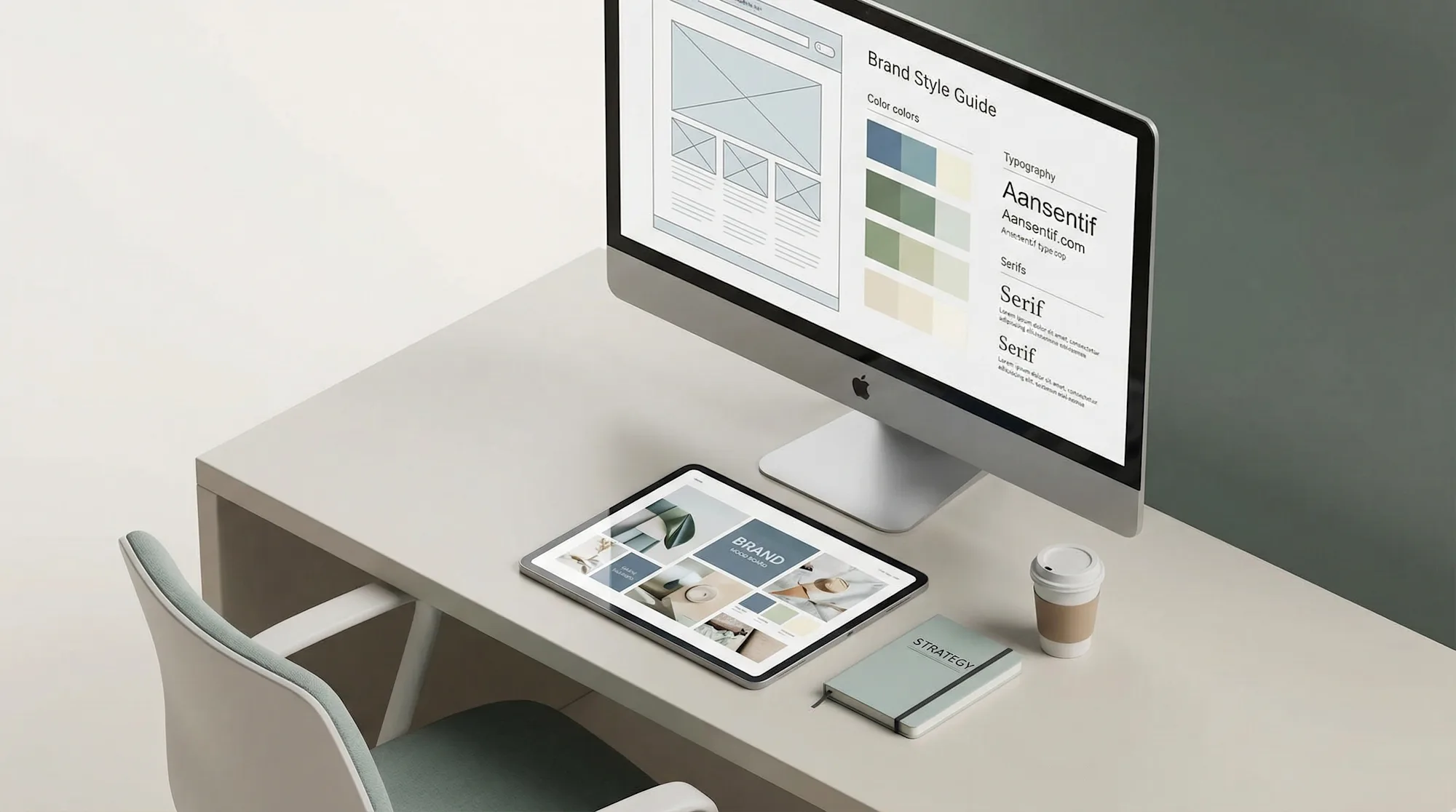
If you’re ready to turn graphics into growth architecture, schedule your Free Brand Consultation with Consort Creative — and start building a system that scales as fast as you do.


- READY TO ACT ON THIS
Your Brand Should Be Working While You're Not.
If this article resonated, the next step is a free 30-minute conversation. No pitch, no pressure — just clarity about where your brand stands and what's worth fixing first.
Book a Free Discovery Call